For years, homeowners have looked for the familiar blue ENERGY STAR label when shopping for windows, heating and cooling equipment, and even newly built homes. So, when headlines announced ENERGY STAR moving from EPA to DOE, it was natural to wonder what would happen to the program and its standards.
If you’re already considering new windows or more attic insulation, the announcement adds another question to your planning. Will the ENERGY STAR standards they’ve been using to compare products still mean the same thing once DOE takes over? And should you wait before moving forward?
You don’t have to wait to replace your windows or improve your insulation. The ENERGY STAR transition plan, which was finalized on August 28, 2026, explains how the DOE will take over ENERGY STAR’s trademark, program leadership, daily operations, and technology systems. The transition should be done by July 2027. The certification process, product specifications, and the familiar blue label will continue through the transition.
Here in Central Virginia, insulation decisions still rest on the same considerations: R-value, state building-code requirements, and how well the work is installed. Those are the things to discuss with your contractor now, without waiting for the federal agencies to finish their handoff.
What Is Actually Changing With ENERGY STAR Moving From EPA to DOE?
The Agency Handoff, In Order
The first formal step came on March 3, 2026, when EPA and DOE signed a Memorandum of Agreement placing ENERGY STAR leadership and administration under DOE.
The agencies finalized their transition plan on August 28. It describes the transfer of the ENERGY STAR trademark, responsibility for running the program, and oversight of its everyday operations. DOE takes the lead, with EPA continuing in a supporting capacity. The plan gives the agencies no more than 12 months from its finalization to complete the transfer.
What Takes the Longest?
Moving the program’s technology systems is expected to be the most involved part of the transition. DOE must take over the ENERGY STAR website, Product Finder, Portfolio Manager, help desk, and associated databases. Even the registration for energystar.gov must change hands. That work is scheduled to finish before July 2027, as outlined in the ENERGY STAR transition plan 2027 timeline.
For someone comparing heat pumps or windows, the difference may be minimal. The agencies are changing who runs the program, while consumers and industry professionals still use the same tools for ongoing operations.
What the Label Still Means on Windows, Equipment, and New Homes
Certification Continues
Homeowners asking whether ENERGY STAR is still valid can continue using the label to identify qualifying products and homes. ENERGY STAR certification means a product, home, building, or plant meets the specifications required to display the program’s mark. The certification process isn’t being discarded as part of the transfer.
For appliances, windows, and other products, independent third-party Certification Bodies verify that models meet ENERGY STAR criteria and report certified products. New homes are handled differently. Home Certification Organizations oversee that process and submit quarterly reports of certified homes.
The Partner Network is Largely Unchanged
An extensive network already supports these activities. More than 15,000 active partners participate in upwards of 10 partnership categories. They include manufacturers, testing laboratories, certification organizations, and residential builders. Since most agreements already name both federal agencies, few will need rewriting.
The Practical Takeaway for a Homeowner
When shopping for ENERGY STAR windows and equipment, what does the ENERGY STAR label mean for your purchase? It confirms that the product meets the program’s efficiency requirements. That remains true for windows and equipment certified before DOE takes over responsibility for ENERGY STAR. Still, the label describes the qualifying product, not every condition it will face once installed.
A window can carry the ENERGY STAR label and still let outside air in if the space around its frame isn’t properly sealed. Likewise, a high-efficiency heating system may have to work harder in a house with inadequate attic insulation or openings that allow conditioned air to escape.
Why Insulation Performance Never Depends on a Federal Label
Insulation is Governed by Three Things, Not a Logo
Whether you’re building a new home or upgrading an existing one, insulation performance comes down to three factors: R-value, Virginia code minimums, and installation quality.
1. R-Value and Assembly U-Factor
R-value measures a material’s resistance to heat flow. The higher the R-value, the more it resists heat moving through the material.
When reviewing insulation R-value in Virginia, homeowners need to consider more than the number printed on the packaging. A wall, ceiling, or floor contains more than insulation. Framing, connections, and how materials fit together affect thermal performance.

U-factor looks at the larger picture by measuring heat transfer through the finished assembly. Framing, insulation gaps, and compressed material can all affect that measurement. So even when a contractor uses insulation with the specified R-value, poor workmanship can leave the finished wall, ceiling, or floor performing below expectations.
2. Virginia Code Minimums
Virginia’s residential energy requirements come from the 2021 International Energy Conservation Code (IECC), with state amendments, enforced as part of its mandatory statewide building code. The 2021 Uniform Statewide Building Code took effect January 18, 2024, as outlined in the Virginia code information. These Virginia residential energy code insulation requirements set the minimum standards builders must follow, from specified insulation to the energy performance expected of various building assemblies.
If you’re planning a project, our guide to Virginia insulation codes and standards explains the requirements in greater detail, including how they apply to different parts of a home.
3. Central Virginia’s Climate Zone
Climate is another factor when determining a home’s insulation needs. For its analysis, the Virginia field study treated the state as Climate Zone 4 and included Campbell County among its sampled jurisdictions. Lynchburg-area homes therefore fall within the same climate-zone framework used throughout the Commonwealth for that study.
Understanding Climate Zone 4 insulation in Virginia helps establish an appropriate baseline, but the home’s existing construction and air-leakage conditions also deserve attention.
What Sealing and Insulating Is Worth
Insulation slows heat transfer, while air sealing limits conditioned air from moving through cracks and openings. Together, they create a more efficient building envelope.
Homeowners can save an average of 15% on heating and cooling costs by air sealing and adding insulation in attics, floors above crawl spaces, and accessible basement rim joists.
Homeowners researching attic insulation in Lynchburg, VA can check the condition of existing attic insulation and crawl space insulation to identify areas where heat loss and air leakage may be affecting comfort and energy use.

How to Evaluate an Insulation Job on Professional Performance
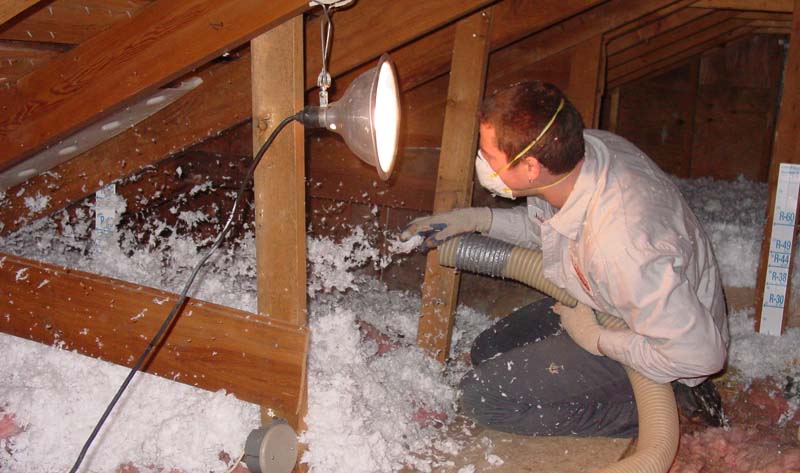
Installation quality is where performance is won or lost
Even when the correct materials and R-values are specified, work quality can make a substantial difference. Professional field teams assess installations using the RESNET protocol, which grades insulation from Grade I (highest installation quality) to Grade III (lowest).
The Virginia residential field study shows why this distinction matters. Although 96% of ceiling observations met the insulation R-value requirement, only 74% met the ceiling U-factor requirement. For floors over unconditioned spaces, most observations met the R-value requirement, yet only 6% met the U-factor requirement. Researchers attributed the difference to installation quality.
The lesson is simple: specifying the right insulation doesn’t guarantee the intended performance if the material isn’t installed properly.
What A Homeowner Should Ask For
If you’re researching how to evaluate an insulation contractor, use this checklist to discuss the proposed work:
- Confirmation of the specified R-value and insulation product for each assembly
- Verification that air sealing will be completed before insulation is installed
- A stated insulation installation quality grade target for attic, wall, and floor insulation
- Whether the contractor offers blower-door or duct-leakage testing to check the completed work
- Confirmation that the proposal addresses the full wall, ceiling, or floor assembly, not just the insulation’s labeled R-value
Why Verification Matters Locally
The Virginia study also identified building-envelope air leakage and duct leakage as the areas with the greatest potential energy savings among the measures evaluated.
That finding reinforces the value of checking completed work rather than relying exclusively on product specifications.
Independent testing can help identify leakage and assess whether construction meets its intended performance goals. Our explanation of why we employ a HERS Rater describes how professional verification fits into that process.
Frequently Asked Questions
No. The program will continue, although DOE is taking over the lead role from EPA. During the transfer, EPA will help maintain operations and pass along the systems and responsibilities needed to run ENERGY STAR. Its familiar label and certification process will remain in place.
The transition is targeted to be complete by July 2027. That includes moving the program’s technology systems, associated databases, and administrative responsibilities to DOE. The agencies committed to completing the transfer within 12 months of finalizing the August 28, 2026, plan.
No. A certified product doesn’t lose its status simply because DOE takes over the program. Manufacturers will continue working through the established certification process, with independent organizations checking products against ENERGY STAR specifications. Homeowners can still use existing certifications when comparing products.
The ENERGY STAR label isn’t what determines whether insulation meets the needs of your home. Look instead at the material’s R-value, the applicable Virginia code, and the quality of the installation. Gaps, compression, and air leaks can undermine performance even when you use the specified insulation.
Lynchburg is included in Climate Zone 4 under the statewide framework used in Virginia’s residential field study. Contractors use the applicable climate-zone requirements when planning insulation work, but they’ll also need to consider the specific wall, attic, or floor assembly and the current state code requirements.
No. The ENERGY STAR handoff doesn’t change Virginia’s building-code requirements or the standards used to assess insulation work. If your attic needs more insulation or your home has noticeable air leaks, you should address those conditions now. The federal timetable won’t change what’s happening inside your walls or above your ceiling.
What Matters Most for Your Home
The ENERGY STAR label may move to a different federal agency, but homes will still lose and gain heat in the same ways. What to pay attention to hasn’t changed: the insulation’s R-value, Virginia code requirements, and how carefully the material is installed. A contractor’s experience and attention to detail will matter far more than which agency administers ENERGY STAR.
If you’re considering an insulation upgrade, Toler Insulating can assess your attic, crawl space, and overall building envelope to see where improvements may help. Understanding how your home performs today is a far better starting point than waiting for the federal transition to finish.
References
United States, Environmental Protection Agency, and United States, Department of Energy. “2026 ENERGY STAR Program Transition Plan.” ENERGY STAR, 28 Aug. 2026, www.energystar.gov/sites/default/files/2026-08/ENERGY%20STAR%20Transition%20Plan%20Final%2008.28.2026_508.pdf.
“Methodology for Estimated Energy Savings.” ENERGY STAR, United States Environmental Protection Agency, www.energystar.gov/saveathome/seal_insulate/methodology.
“Virginia.” Building Energy Codes Program, United States Department of Energy, www.energycodes.gov/status/states/virginia.
Bartlett, R., et al. Virginia Residential Energy Code Field Study: Baseline Report. PNNL-29036, Pacific Northwest National Laboratory, Oct. 2019, www.energycodes.gov/sites/default/files/2020-06/Virginia_Residential_Field_Study.pdf.
“Codes.” Virginia Department of Housing and Community Development, www.dhcd.virginia.gov/codes.