Even if an insulation job looks good, hidden problems can remain. Air can leak through small gaps, ducts might lose heated or cooled air, and some areas may not be properly insulated once everything is closed up.
If you don’t test for these issues, you might not notice them until rooms feel uncomfortable, your energy bills stay high, or you run into problems during an inspection.
A HERS rater gives you actual measurements to work with. A certified RESNET HERS Rater tests and models your home’s energy performance to create a HERS Index score. Having a HERS Rater on staff means a blower door test, duct leakage test, and energy modeling can be part of the same insulation project instead of being handled by another company.
You get a clearer picture of how your home performs and where improvements may be needed, rather than judging the job by how it looks when finished.
What Is a HERS Rater — and What Is a HERS Index Score?
Defining the credential
A HERS Rater gets certified by a RESNET-accredited Rating Provider and follows RESNET standards when doing inspections, tests, and home energy modeling. To become certified, the rater must pass a national exam and complete five supervised ratings.
The rater uses a standard home energy rating system, so the assessment isn’t based only on a visual inspection or a contractor’s opinion.
Understanding the HERS Index
The HERS Index gives your home a number that represents its energy performance. A home built to the 2006 IECC reference-home specifications scores 100, and a net-zero-energy home scores 0. Lower scores mean better efficiency.
Think of it like the MPG, or fuel-efficiency, rating on a car, but in reverse. With the HERS Index, the lower the number, the more efficient the home.
The score gives homeowners and builders a benchmark for energy performance, while Virginia Insulation Codes and Standards establish the code baseline that may also apply to the project.
What a HERS Rater Actually Tests On Your Project
Plan review and modeling
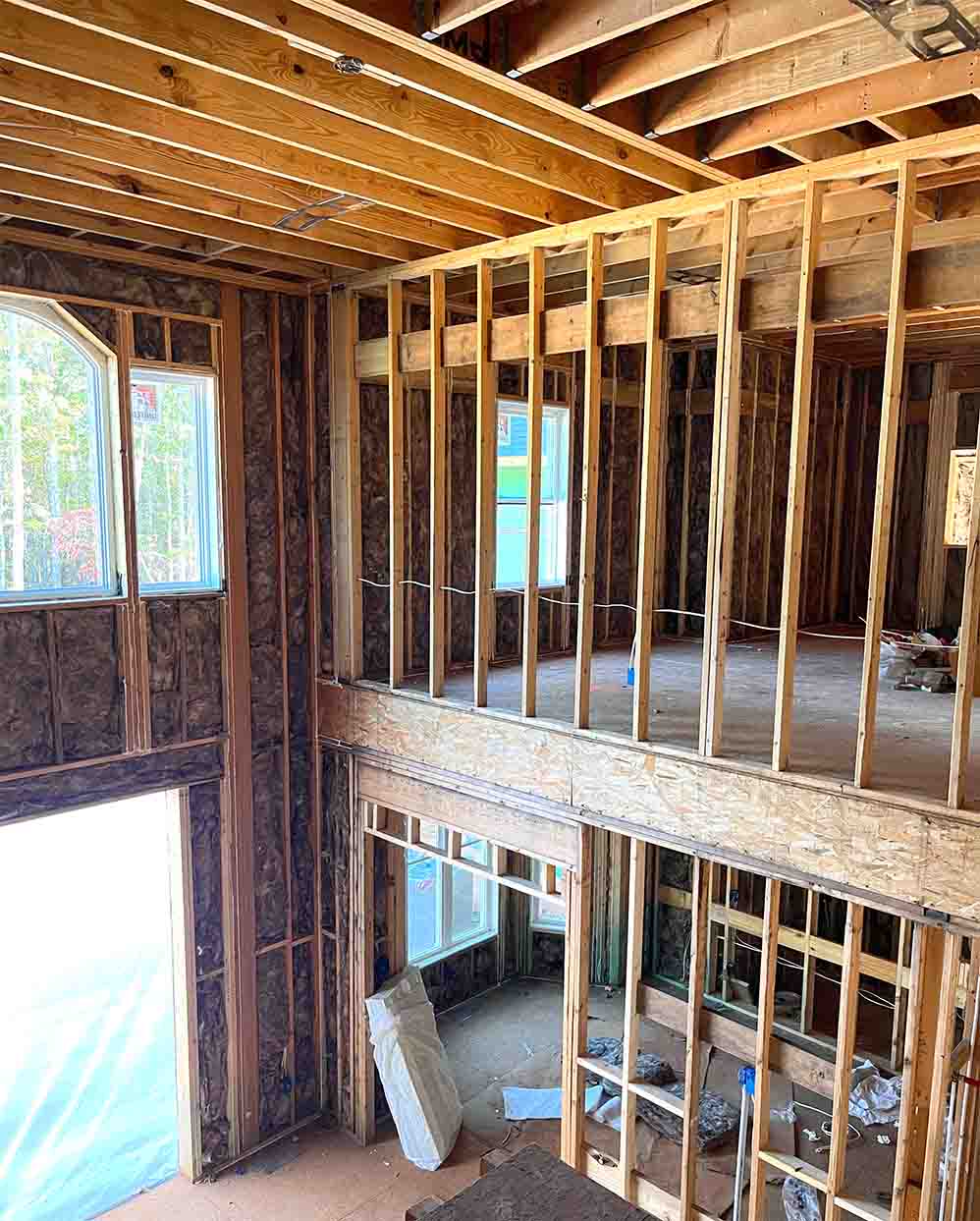
For new homes, the process starts before insulation is installed. The rater reviews the construction plans and uses energy-analysis software to create a projected HERS Index score before the home is finished.
That early model helps the builder identify changes needed to meet energy goals, including ENERGY STAR performance guidelines. If adjustments are needed, the team can address them before construction is complete.
On-site diagnostic testing
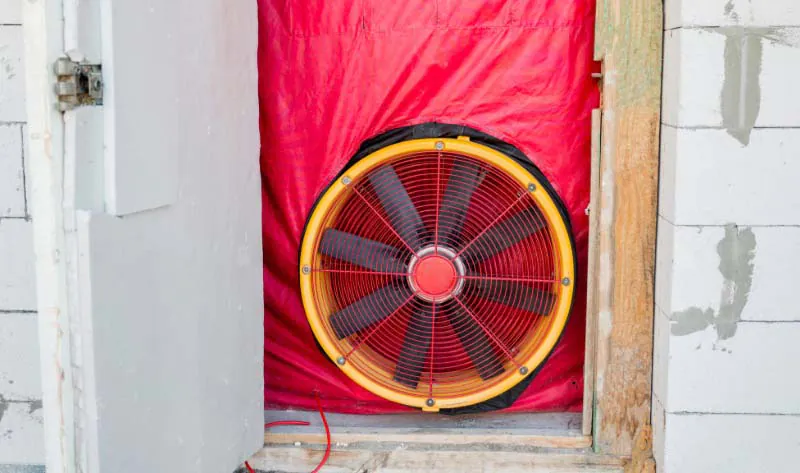
When inspecting a home, the rater usually does a blower door test to check for air leaks throughout the house and a duct leakage test to determine how much air escapes from the ducts.
These are diagnostic tests, not just a quick look around. The results are combined with the plan review and energy model to calculate the final HERS score.
Air leaks and insulation gaps in the attic can affect whole-home performance, which is why attic insulation services often go hand in hand with air sealing.
Why an In-House Rater Changes the Outcome for Homeowners and Builders
For builders
For builders, a HERS Rater can document code compliance and ENERGY STAR-pathway data during the build instead of treating verification as something that happens only after the work is done.
When the rater and insulation crew are part of the same team, there is less back-and-forth with an outside verifier. If testing finds a problem, the insulation crew can address it before the work is checked again.
If you’re building an ENERGY STAR certified home in Virginia, local rules or program requirements can affect the verification process. You may also come across the term RESNET energy smart contractor when researching energy-focused companies, so it helps to review the credentials and testing included in the project.
For homeowners
Sealing air leaks and adding insulation in attics, floors above crawl spaces, and basements can trim heating and cooling costs by around 15%. Actual savings will vary from one home to another.
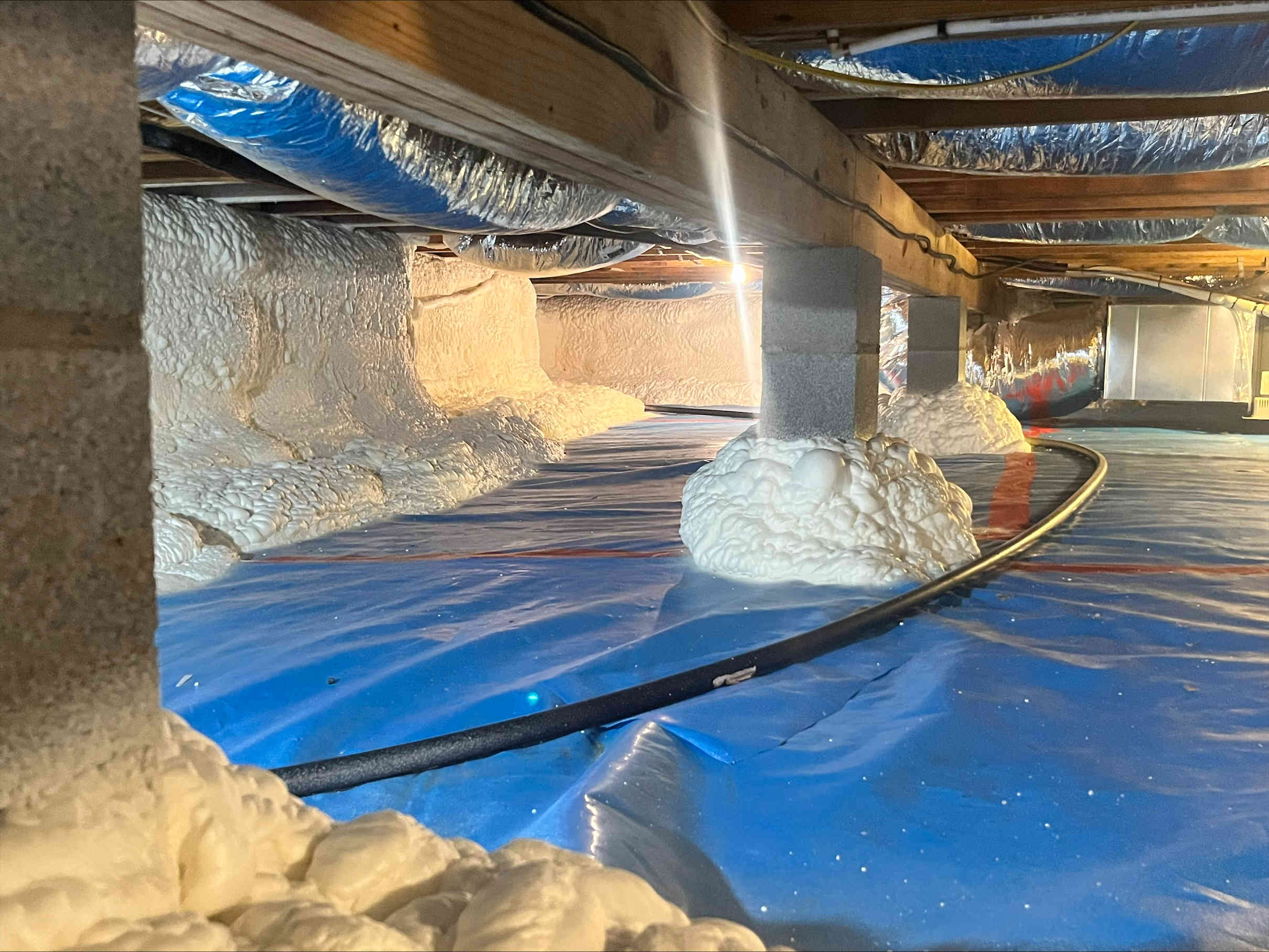
Diagnostic testing gives you measurements from your own house. Those results can show where air leakage is affecting performance and where air sealing or insulation may need attention. Depending on what the testing and inspection uncover, the work may include spray foam insulation for air sealing needs or crawl space insulation below the home.
If you’re looking for an energy audit in Lynchburg, VA, or an insulation contractor in Lynchburg, VA, a HERS-informed project gives you measured data rather than relying on appearance alone.
Frequently Asked Questions
Lower scores are better. A score of 100 represents a home built to the 2006 IECC reference-home specifications, and 0 represents net-zero energy use. There isn’t one ideal score for every property. Age, design, construction, and upgrades all affect how a home performs.
A HERS score combines energy modeling with on-site diagnostic testing. For new construction, that includes a plan review along with blower door and duct leakage test results.
Not always. Some ENERGY STAR and code-compliance paths use HERS ratings, but requirements vary. Your local building official can tell you if one applies to your project.
A general energy audit may use different methods depending on the provider. A HERS rating uses a nationally standardized RESNET-governed system and produces a HERS Index score
Stay Comfortable All Summer Long
Three numbers tell the story for nearly every central Virginia home during the summer. Air conditioning electricity use accounts for roughly one-fifth of household electric bills, a superheated attic makes the AC work harder, and improving insulation with air sealing delivers an average of 15% savings on heating and cooling costs.
If you’re looking to improve comfort, lower the high summer energy bills Virginia homeowners often experience, and boost your home’s overall efficiency, start by reducing attic heat gain and tightening your home’s envelope. The right insulation and air sealing strategy can make a noticeable difference in both comfort and long-term energy savings.
HERS Raters can test existing homes too. For an insulation retrofit, testing before and after the work can provide measurable performance data from both points in the project.
A HERS Rater turns “we did a good job” into a result you can measure and test. With the rater in-house, you also don’t have to wait for a third-party to schedule verification.
Toler Insulating can help you plan an insulation project around how your home performs. Schedule a free estimate and ask how HERS-informed testing can help with your project.
References
RESNET. “HERS® Raters.” RESNET, Residential Energy Services Network, https://www.resnet.us/raters/hers-raters/. Accessed 25 Aug. 2026.
United States Environmental Protection Agency. “Why Seal and Insulate?” ENERGY STAR, https://www.energystar.gov/saveathome/seal_insulate/why-seal-and-insulate. Accessed 25 Aug. 2026.