Summer brings longer days, higher temperatures, and, unfortunately, higher utility bills for many homeowners. If you live in central Virginia, you’ve probably noticed your electric bill climbing every July and August without knowing exactly why. The truth is that a few key numbers explain where that money is going and what improvements can make the biggest difference.
Cooling is the single biggest driver of summer electricity use, and a hot attic forces your air conditioner to work longer and harder than it should. If you’ve experienced summer insulation issues in your Virginia home, understanding these numbers can help you make smarter decisions about improving comfort and lowering costs.
Here are the three statistics every homeowner should know as part of a Central Virginia summer energy checklist.
Three numbers explain most of a central Virginia summer power bill. First, air conditioning electricity use accounts for about 19% of the electricity used in a typical U.S. home. Second, on a sunny summer afternoon, a roof above the attic can reach 150°F or more, radiating heat down onto ductwork and HVAC equipment so the AC works harder. Finally, air sealing savings can be significant, as ENERGY STAR estimates homeowners save an average of 15% on heating and cooling costs by air sealing and adding insulation. For homes in Climate Zone 4A in Virginia, the highest-return investment is reducing attic heat gain while tightening the home’s envelope.
Why Cooling Drives Your Summer Power Bill
The Stat Behind the Bill
According to the U.S. Energy Information Administration’s Residential Energy Consumption Survey, air conditioning accounts for approximately 19% of all electricity consumed in a typical U.S. home. That percentage peaks in July and August when cooling demand is highest, making air conditioning one of the largest contributors to the high summer energy bill Virginia homeowners experience every year.
Why a Hot Attic Makes It Worse
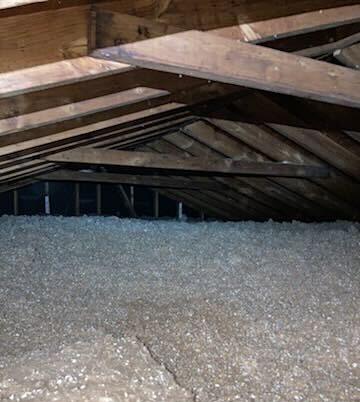
On a sunny summer afternoon, the roof above your attic can reach temperatures of 150°F or more. That intense heat transfers through the roof deck and radiates onto everything inside the attic, including the ductwork and air handler found in many central Virginia homes.
This is a hot attic AC systems have to work against to maintain comfortable indoor temperatures. When ducts operate inside a hot, unconditioned attic, conduction losses alone can increase heating and cooling energy use by roughly 10% or more. Combined with poor insulation or air leaks, that extra workload drives up cooling energy use throughout the summer.
Proper attic ventilation works together with insulation to help manage attic temperatures and improve overall energy performance.
The Central Virginia Summer Energy Checklist
Use this quick checklist to understand where your energy dollars are going and what upgrades typically deliver the greatest return.
| Stat | Info | Takeaway |
|---|---|---|
| 1. Cooling is the heavy hitter | Air conditioning accounts for about 19% of a typical home’s electricity use. | Upgrades that give your AC a break help reduce summer cooling bill costs & improve overall home energy performance. |
| 2. The attic is the pressure point | The roof can reach 150°F+ on a sunny afternoon, radiating heat into the attic & directly onto the ductwork & air handler. | Adding attic insulation to reduce attic temperature in summer is a top way to improve attic conditions & home comfort. |
| 3. Sealing and insulating pays back | With proper air sealing & insulation, homeowners can save an average of 15% on heating & cooling costs. | Upgraded insulation & air sealing is a high-return improvement for existing homes. Consider spray foam insulation for its combined insulating and air sealing properties. |
What This Means for a Zone 4A Insulation Strategy
Lynchburg and the surrounding region are located in Climate Zone 4A, also known as Mixed-Humid. This climate experiences significant cooling loads in summer and heating loads in winter. High summer humidity adds another layer of stress to your home’s HVAC system.
That makes insulation especially important. Rather than focusing on a single season, homeowners should create a well-insulated, tightly sealed building envelope that keeps conditioned air inside while reducing unwanted heat from the attic.
A simple checklist includes:
- Confirm your attic has adequate insulation depth for Climate Zone 4A.
- Reduce attic heat gain so your AC isn’t constantly battling excessive heat.
- Air seal penetrations around attic openings, top plates, windows, and doors.
- Make sure ductwork and the air handler aren’t losing conditioned air into a hot attic.
Taking these steps can help keep cooling energy use low, improve indoor comfort, and reduce summer cooling bill costs year after year.
Frequently Asked Questions
In a typical U.S. home, air conditioning accounts for about 19% of total electricity use, and that share is highest in summer.
On a sunny summer afternoon, a conventional roof can reach 150°F or more, and that heat radiates down into the attic and onto the ductwork and air handler, which is why a hot attic makes the AC work harder.
ENERGY STAR estimates homeowners save an average of 15% on heating and cooling costs by air sealing and adding insulation in attics, floors over crawl spaces, and accessible basement rim joists.
Lynchburg and central Virginia are in IECC Climate Zone 4A (Mixed-Humid), according to the U.S. Department of Energy’s Building America program.
Stay Comfortable All Summer Long
Three numbers tell the story for nearly every central Virginia home during the summer. Air conditioning electricity use accounts for roughly one-fifth of household electric bills, a superheated attic makes the AC work harder, and improving insulation with air sealing delivers an average of 15% savings on heating and cooling costs.
If you’re looking to improve comfort, lower the high summer energy bills Virginia homeowners often experience, and boost your home’s overall efficiency, start by reducing attic heat gain and tightening your home’s envelope. The right insulation and air sealing strategy can make a noticeable difference in both comfort and long-term energy savings.
Stay Comfortable All Summer Long
Three numbers tell the story for nearly every central Virginia home during the summer. Air conditioning electricity use accounts for roughly one-fifth of household electric bills, a superheated attic makes the AC work harder, and improving insulation with air sealing delivers an average of 15% savings on heating and cooling costs.
If you’re looking to improve comfort, lower the high summer energy bills Virginia homeowners often experience, and boost your home’s overall efficiency, start by reducing attic heat gain and tightening your home’s envelope. The right insulation and air sealing strategy can make a noticeable difference in both comfort and long-term energy savings.
References
ENERGY STAR. “Methodology for Estimated Energy Savings.” U.S. Environmental Protection Agency, www.energystar.gov/saveathome/seal_insulate/methodology.
U.S. Department of Energy. “Building America Climate-Specific Guidance.” Office of Energy Efficiency and Renewable Energy, www.energy.gov/cmei/buildings/building-america-climate-specific-guidance.
U.S. Department of Energy. “Cool Roofs.” Energy Saver, www.energy.gov/energysaver/cool-roofs.
U.S. Department of Energy. “Ducts in Conditioned Space — Building America Top Innovation.” Office of Energy Efficiency and Renewable Energy, www.energy.gov/sites/prod/files/2014/01/f6/1_1g_ba_innov_ductsconditionedspace_011713.pdf.
U.S. Energy Information Administration. “How Much Electricity Is Used for Air Conditioning in the United States?” Frequently Asked Questions, www.eia.gov/tools/faqs/faq.php?id=1174.