Every spring and fall, most Central Virginia homeowners find themselves running their furnace in the morning and switching on their AC by the afternoon. Homes with uneven or minimal insulation cannot buffer these temperature swings, so their HVAC system works overtime to keep the home comfortable. This leads to spiking energy bills, HVAC short cycling, and rooms that stay cold while others get stuffy.
Homes that heat and cool in the same week need insulation sized for their climate zone. The Lynchburg area falls under the IECC climate zone 4A’s mixed-humid conditions. That means homes need full-depth attic coverage, an insulated or encapsulated crawl space, and no weak links between them.
It is not about piling on more insulation in one spot, though. It is about covering the envelope evenly so your house needs less help from its HVAC system, whether heating or cooling. Smart Lynchburg, VA insulation planning starts with a whole-home assessment that shows exactly where your house is falling short before the next swing hits.
What a ‘Shoulder Season Swing’ Is and Why Lynchburg Feels It More
Defining the swing
A “shoulder season swing” happens during the transition weeks of spring and fall, especially during the months of April to early June and September to October. These are the times when Lynchburg mornings often dip into the 40s and afternoons climb into the 70s and your house is forced to handle both extremes before dinner. These spring and fall HVAC swings separate a comfortable home from one that never quite settles.
Central Virginia’s climate context
Virginia has five distinct climate regions and boundary areas, according to the University of Virginia’s Climate Office. These regions are based on landscape and agricultural fluid patterns. Lynchburg is noted among Virginia localities for its milder climate amenities, including a longer growing season and infrequent subzero temperature minimums, compared to the bitterly cold winter temps of the nearby Blue Ridge highlands. That relative mildness is exactly why the swings feel so pronounced here, since a hard freeze rarely locks things in place for long.
Climate zone matters for sizing
Lynchburg falls under IECC Climate Zone 4A, a mixed-humid zone. IECC climate zones differ from the climate regions because they are based on Heating Degree Days (HDD) and humidity levels. Mixed-humid zones need insulation that performs in both directions, retaining heat in winter and rejecting it in summer, rather than a single-season strategy. For a closer look at the numbers behind the requirements, check out the “Homeowner’s Guide to Virginia Insulation Codes and Standards.”
Where Shoulder-Season Homes Lose Control First
The attic is the biggest swing point
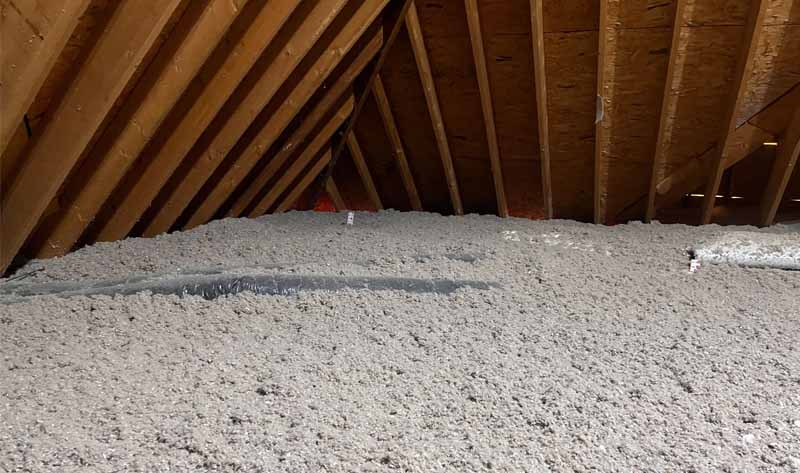
Attic insulation reduces heat loss in winter and heat gain in summer at the same time. This keeps ceiling temperatures closer to room temperatures for more even distribution throughout your house. The attic that got you through last winter just fine can still let summer heat gain spike by the afternoon if insulation coverage is thin or has settled over the years. For insulation to perform at its best, it is important that the blown-in insulation Lynchburg attics typically use keeps a consistent depth across the whole space, not just at the center.
Crawl spaces add a moisture wrinkle
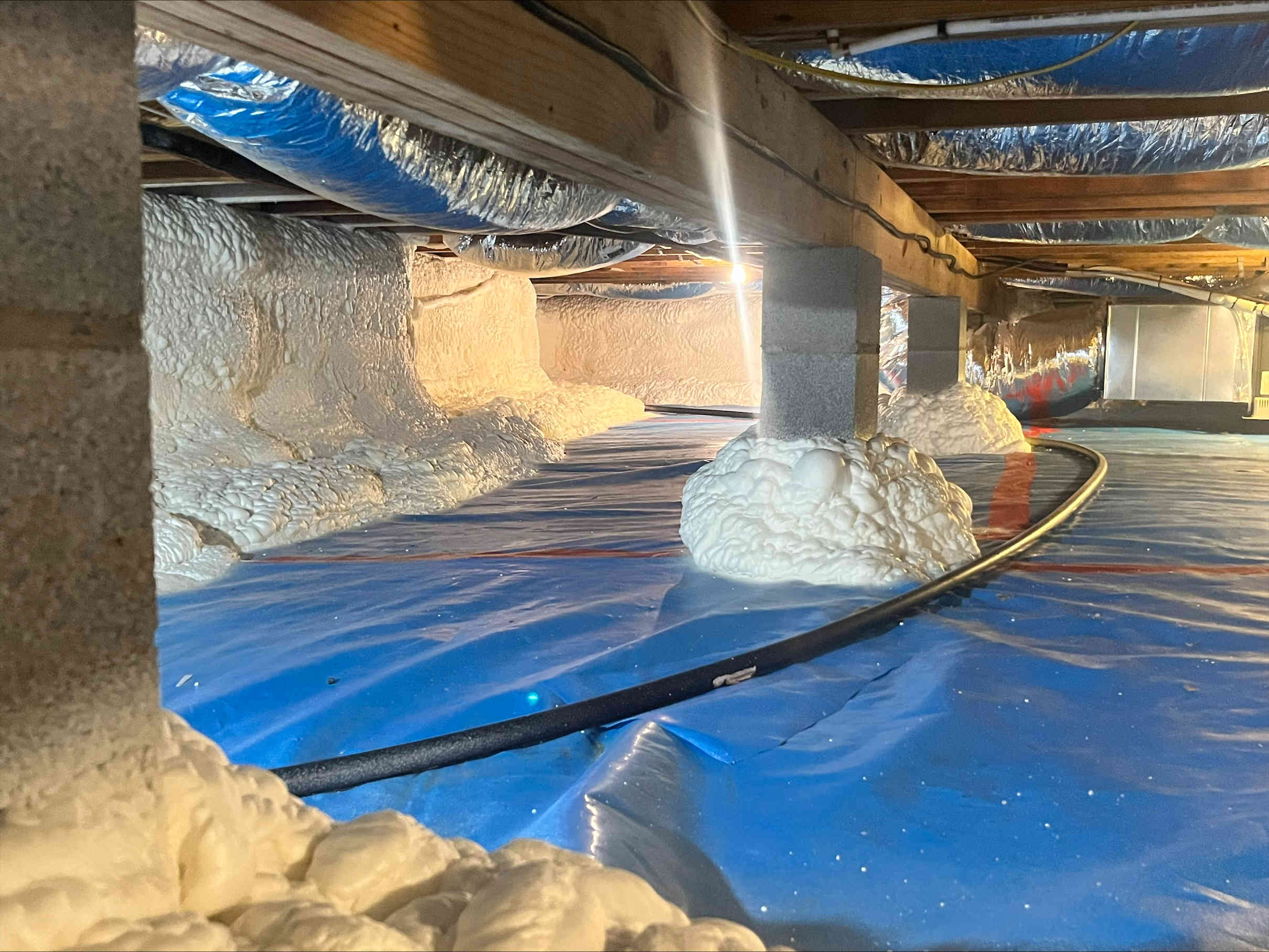
During shoulder season rain, damp soil in your vented crawl space can raise humidity as temperatures swing. This adds a second layer to the comfort problem. Managing that moisture matters just as much as managing temperature, since one feeds the other. A conditioned or encapsulated crawl space provides proper crawl space insulation for Lynchburg homes that helps control shared humidity and heat-loss problems year-round.
Air sealing gaps show up in swing weeks
The same building envelope leaks that waste heat in January also waste cooled air in July. These leaks cannot be fixed by insulation alone. They need a combined solution of air sealing and insulation to do the job. The great news is that by air sealing your home and adding insulation in the attic, the floors over the crawl space, and your basement, you can save an average of 15% on your heating and cooling costs. That savings shows up quickly in shoulder season, when your HVAC system cycles on and off all day.
Planning Insulation So the Home Handles Both Directions
Match R-value to the whole assembly, not just the attic
Regardless of the specific insulation R-value required for your climate zone, what matters most for shoulder season is that that R-value gets applied consistently across the whole assembly, not just the attic. But attic insulation is an important starting point.
Choosing material for a swing-season home
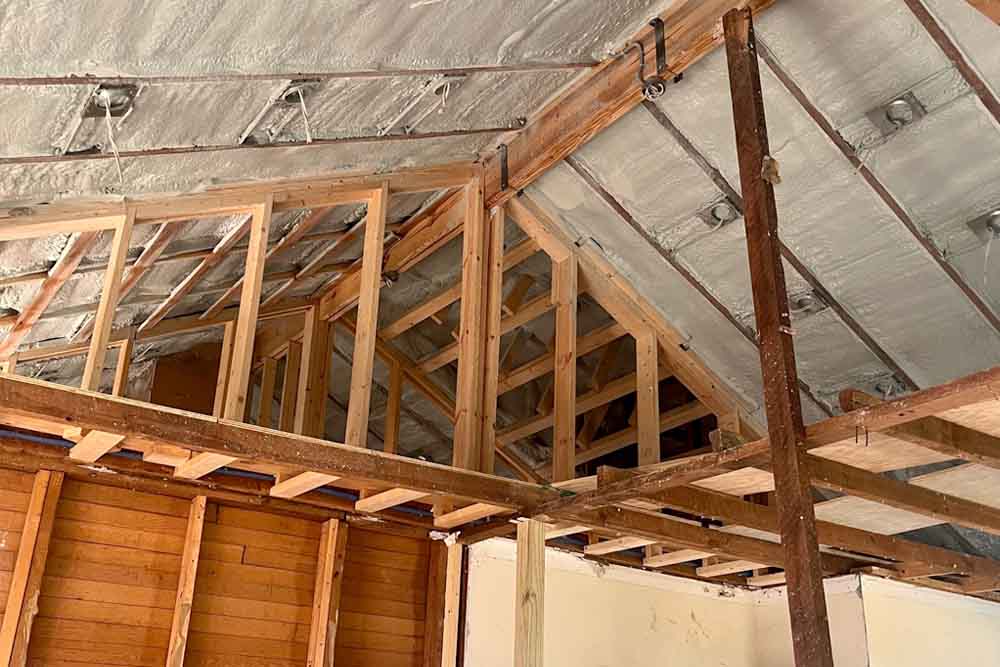
There is more than one effective option for insulating and sealing your home. Fiberglass insulation is budget-friendly and works well with correct depth and coverage. Cellulose insulation offers a denser fill for tighter cavities and older walls. Spray foam insulation combines insulation and air sealing in one step and is useful where leakage is the dominant swing-season problem. When considering cellulose vs fiberglass vs spray foam, Virginia homes may need a variety of insulation materials for the job.
Why a whole-home assessment beats spot-fixing
A single under-insulated spot, like an attic knee wall or a crawl space band joist, can offset the gains made everywhere else during swing weeks. Undergoing a professional evaluation to find that weak link beats assuming one upgrade solves everything. The “Post-Winter Crawl Space Inspection: A Lynchburg Homeowner’s Spring Checklist” is an ideal resource that walks through what that inspection looks for.
Frequently Asked Questions
A shoulder season is the transition weeks in spring and fall when day-to-night temperature swings are wide. Insulation’s job during these weeks is to buffer both directions at once, not just one.
Yes. The Department of Energy (DOE) reports that ceiling insulation reduces both heat loss in winter and heat gain in summer.
Yes. Lynchburg sits in Zone 4A, a mixed-humid zone, which calls for specific insulation coverage levels. Check out this Virginia code guide that breaks down the specific R-values required for Virginia homes.
That pattern usually points to attic heat gain that builds by the afternoon, combined with overnight heat loss through the same under-insulated ceiling plane.
Stay Comfortable All Summer Long
Three numbers tell the story for nearly every central Virginia home during the summer. Air conditioning electricity use accounts for roughly one-fifth of household electric bills, a superheated attic makes the AC work harder, and improving insulation with air sealing delivers an average of 15% savings on heating and cooling costs.
If you’re looking to improve comfort, lower the high summer energy bills Virginia homeowners often experience, and boost your home’s overall efficiency, start by reducing attic heat gain and tightening your home’s envelope. The right insulation and air sealing strategy can make a noticeable difference in both comfort and long-term energy savings.
Spring and fall rain combined with swinging temperatures can raise humidity in vented crawl spaces. A conditioned crawl space helps control and manage that moisture instead of letting it build.
Stay Comfortable All Summer Long
Three numbers tell the story for nearly every central Virginia home during the summer. Air conditioning electricity use accounts for roughly one-fifth of household electric bills, a superheated attic makes the AC work harder, and improving insulation with air sealing delivers an average of 15% savings on heating and cooling costs.
If you’re looking to improve comfort, lower the high summer energy bills Virginia homeowners often experience, and boost your home’s overall efficiency, start by reducing attic heat gain and tightening your home’s envelope. The right insulation and air sealing strategy can make a noticeable difference in both comfort and long-term energy savings.
Be Ready for the Next Swing
Shoulder-season discomfort is a sizing and coverage issue, not a case of needing more insulation everywhere. The attic, the crawl space, and air sealing need to be evaluated together, since a gap in one undoes progress in the others. Managing home comfort temperature swings starts with knowing exactly where your home’s envelope is not doing its job.
Toler Insulating has served Central Virginia homeowners since 1994. Our decades of local experience and expertise ensure we know where shoulder-season homes tend to lose ground first. If your house runs hot upstairs and cold at sunrise, contact us today to schedule a whole-home insulation assessment before the next seasonal swing hits.
References
“2021 Statewide Virginia Residential Code: Summary of Key Residential Energy Code Requirements.” North American Insulation Manufacturers Association/ Insulation Institute, https://insulationinstitute.org/wp-content/uploads/2025/05/N149-VA-Energy-Code-0425.pdf.
“2021 Virginia Residential Code.” International Code Council (ICC), https://codes.iccsafe.org/content/VARC2021P2/chapter-11-re-energy-efficiency#VARC2021P2_Ch11_SecN1102.1.3.
“Ceilings and Attics: Install Insulation and Provide Ventilation.” Building America Program, Office of Building Technology, State and Community Programs, U.S. Department of Energy, Feb. 2000, https://www1.eere.energy.gov/buildings/publications/pdfs/building_america/26450.pdf.
Hayden, Bruce P., and Patrick J. Michaels. “Virginia’s Climate: The Cocorahs ‘State Climate’ Series.” University of Virginia Climate Office, Department of Environmental Sciences, https://glenallenweather.com/climate/StatesPDF/VA.pdf.
“Why Seal and Insulate?” ENERGY STAR, U.S. Environmental Protection Agency, www.energystar.gov/saveathome/seal_insulate/why-seal-and-insulate.