Summer in Lynchburg and central Virginia brings sustained heat and humidity. And for many homeowners, that means hot upstairs rooms, uneven temperatures, and rising energy bills. What most people don’t realize is that these comfort issues often trace back to hidden summer insulation issues Virginia homeowners overlook.
Without proper air sealing and insulation, cool air escapes while extreme attic heat radiates downward. The U.S. Department of Energy notes that air leakage accounts for a significant portion of heating and cooling energy loss in typical homes.
That means your HVAC system works harder, your bills climb higher, and your home still doesn’t feel comfortable. If your home has hot upstairs rooms, constantly running AC, or rising summer energy costs, insulation issues are likely the root cause. The good news: you can often spot the warning signs yourself.
If your Virginia home has hot upstairs rooms, high energy bills, or your HVAC system runs constantly in summer, insulation issues are likely to blame. Checking your attic, crawl space, and exterior walls for damaged, compressed, or missing insulation is the first step toward restoring comfort and reducing cooling costs.
This guide will walk you through how to identify insulation problems in your attic, crawl space, and walls, understand R-value Virginia requirements, and know when it’s time to call a professional.
Not sure where the problem is? A professional insulation assessment can pinpoint exactly what’s driving up your energy bills.
Why Summer Exposes Insulation Problems in Virginia Homes
How Heat and Humidity Stress Your Insulation
Virginia lies in Climate Zone 4A, a mixed-humid region where summer temperatures regularly exceed 90°F and humidity is high. These conditions push your home’s thermal envelope to its limits.
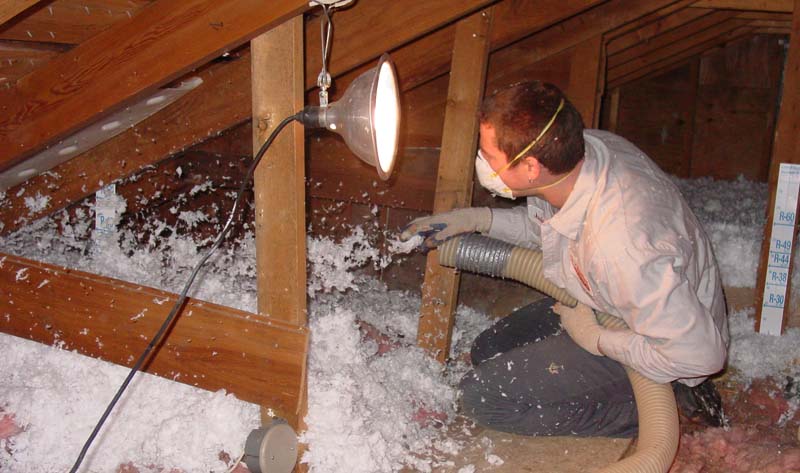
An under-insulated attic can reach temperatures of 150°F or more, radiating heat into your living space and reducing overall HVAC efficiency.
At the same time, poorly insulated crawl spaces allow humid air to rise into the home, increasing moisture levels, impacting indoor air quality, creating condensation risks, and degrading insulation performance.
This combination of heat and humidity is exactly why insulation problems show up so aggressively in summer.
Signs Your Insulation Isn’t Keeping Up
Watch for these common indicators:
- Upstairs rooms feel significantly hotter than the rest of the house
- Your AC runs constantly but struggles to maintain the temperature
- Energy bills spike during peak summer months
- You notice excess humidity or musty odors indoors
ENERGY STAR confirms that improving insulation and sealing your home are among the most cost-effective ways to boost energy efficiency and comfort.
Where to Check for Summer Insulation Issues
Attic Insulation
Your attic is the first place to look for problems.
Check for:
- Gaps or missing attic insulation
- Compressed or sagging fiberglass batts
- Uneven coverage or exposed joists
- Daylight visible through the roof boards, indicating gaps
The DOE recommends that attic insulation in Climate Zone 4 reach R-49 to R-60; if your insulation is below this range, upgrading can meaningfully reduce cooling costs. If your attic insulation is below recommended levels, upgrading with materials such as blown-in insulation can help restore proper coverage and improve performance.
Crawl Space Insulation
Your crawl space plays a major role in both comfort and moisture control.
Inspect for:
- Wet or sagging crawl space insulation
- Standing water or damp conditions
- Missing or damaged moisture barrier
- Musty odors

Moisture-damaged insulation loses its effectiveness and can contribute to mold growth, making this area critical for maintaining indoor air quality. In addition, missing or damaged barriers allow ground moisture to degrade insulation and promote mold. The DOE’s moisture control guidance emphasizes that air movement accounts for more than 98% of water vapor transport in building cavities, making air sealing critical alongside insulation.
Walls and Air Sealing
Even if your attic and crawl space look fine, your walls may still be losing energy.
Check for:
- Hot or uneven wall surfaces indicate missing or settled insulation in the wall cavity
- Drafts near windows, doors, or outlets
- Air leaks around plumbing or electrical penetrations
Virginia Tech’s Cooperative Extension recommends a comprehensive approach to air sealing that addresses gaps around penetrations, recessed lights, and ductwork connections before adding insulation. Targeted air sealing helps close these gaps and prevents conditioned air from escaping.
Insulation Solutions for Virginia’s Summer Heat
Understanding R-Value Requirements
Virginia building codes recommend specific insulation levels based on climate. Virginia’s energy code for Climate Zone 4A sets minimum insulation R-values at R-49 for attics, R-20 or R-13+5 for walls, and R-10 for crawl space walls (conditioned).
Meeting proper R-value Virginia standards ensures your home can handle both summer heat and winter cold while maintaining strong energy efficiency.
Spray Foam Insulation
Spray foam insulation offers a two-in-one solution: insulation plus air sealing.
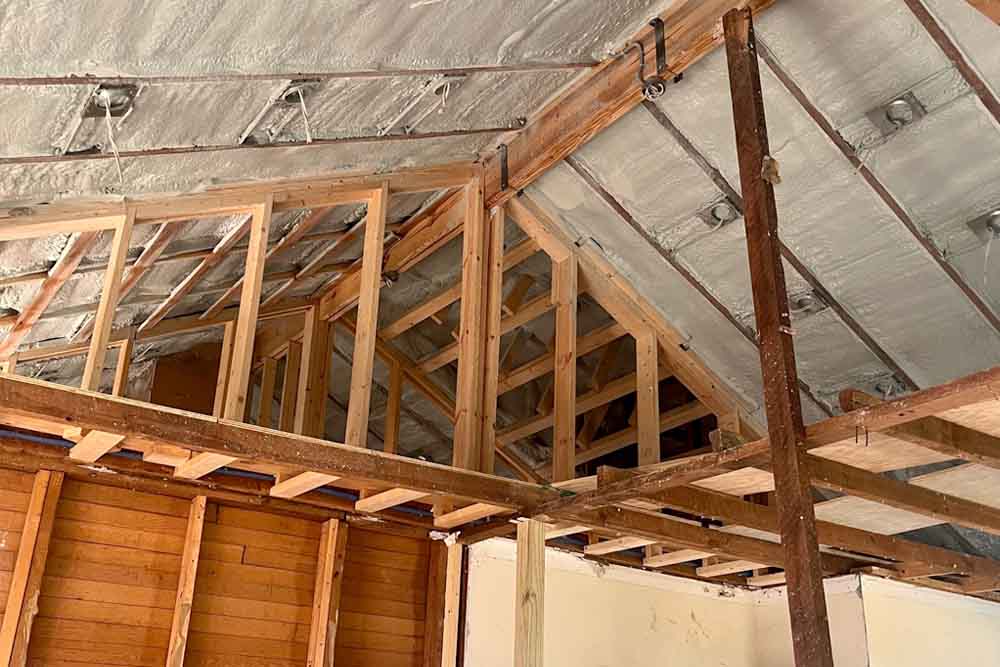
Closed-cell spray foam is moisture-resistant, delivers a high R-value per inch, and conforms to irregular surfaces around pipes, wires, and framing. It expands to fill gaps, blocks air leakage, and provides a high R-value per inch, making it especially effective in humid climates where controlling moisture and airflow is critical.
Blown-In Insulation
Blown-in insulation is one of the most cost-effective ways to improve attic performance. It is effective for topping off existing attic insulation to reach the recommended R-49 to R-60 range.
It fills gaps and irregular spaces, making it ideal for restoring full coverage where batts may fall short. The DOE’s Building America program identifies blown-in insulation as a cost-effective upgrade for improving thermal performance in existing homes.
When to Call a Professional
If you notice widespread damage, persistent moisture issues, mold, or rising energy bills despite visible insulation, it’s time for a professional assessment.
A home energy audit uses tools like blower door testing and thermal imaging to identify hidden air leaks and insulation gaps that aren’t visible to the naked eye. In many cases, older homes may require insulation replacement to restore full performance and efficiency.
A professional can help find the best solution for your home while ensuring everything is done safely and effectively. The DOE’s weatherization guidelines emphasize that air sealing and insulation improvements should be performed together to achieve optimal thermal performance while preventing moisture problems. In addition, spray foam installation requires experienced contractors to ensure proper coverage, adhesion, and compliance with Virginia’s building code.
FAQ
Look for hot rooms upstairs, HVAC systems that run constantly, rising energy bills, and visible insulation gaps in the attic or crawl space; a DIY inspection with a lit incense stick near windows and outlets can reveal air leaks
For Climate Zone 4A (Lynchburg and most of Virginia), the IECC recommends R-49 to R-60 for attics, R-20 or R-13+5 for walls, and R-10 for conditioned crawl space walls to maintain optimal home energy efficiency.
Yes. Spray foam provides insulation and air sealing in one step, making it particularly effective in Virginia’s humid climate, where controlling both heat transfer and moisture movement is essential.
ENERGY STAR estimates that homeowners can save an average of 15% on heating and cooling costs by air sealing and adding insulation in key areas like the attic and crawl space.

Conclusion
Summer is when insulation problems become impossible to ignore, often showing up as hot rooms, high bills, and overworked cooling systems.
By addressing issues in your attic, crawl space, and walls, you can improve comfort, protect your home from moisture, and increase overall energy efficiency. Contact Toler Insulating today to schedule a professional insulation assessment for your Lynchburg-area home. Our experienced team has been helping Virginia homeowners improve comfort and energy efficiency since 1994.
References
ENERGY STAR. (n.d.). Seal and insulate your home. U.S. Environmental Protection Agency. https://www.energystar.gov/saveathome/seal_insulate
Pacific Northwest National Laboratory. (n.d.). Unvented, insulated crawlspaces. Building America Solution Center. https://basc.pnnl.gov/resource-guides/unvented-insulated-crawlspaces
U.S. Department of Energy. (n.d.). Air sealing your home. Energy Saver. https://www.energy.gov/energysaver/air-sealing-your-home
U.S. Department of Energy. (n.d.). Insulation. Energy Saver. https://www.energy.gov/energysaver/insulation
U.S. Department of Energy. (n.d.). Moisture control. Energy Saver. https://www.energy.gov/energysaver/moisture-control
U.S. Department of Energy. (2024, June). Insulate conditioned crawl space wall [Weatherization Installer Job Aid 12-4]. https://www.energy.gov/sites/default/files/2024-07/12-4_insulate-conditioned-crawl-space-wall.pdf
U.S. Department of Energy. (n.d.). Building America Solution Center. Office of Energy Efficiency and Renewable Energy. https://www.energy.gov/eere/buildings/building-america-solution-center
Virginia Department of Housing and Community Development. (n.d.). Building codes. https://www.dhcd.virginia.gov/building-codes
Virginia Cooperative Extension. (n.d.). Energy. Virginia Tech. https://ext.vt.edu/energy.html